Seam Flat Ceiling System
UET’s Seam Flat Ceiling System is a direct-fix ceiling arrangement that combines a backing board, adhesive, and fiberglass acoustic board to create a clean, coordinated ceiling surface. The system can accommodate square-edge, beveled-edge, and tegular-edge tile options. Confirm the substrate, panel configuration, joint treatment, fixing method, and project conditions before specification or ordering.
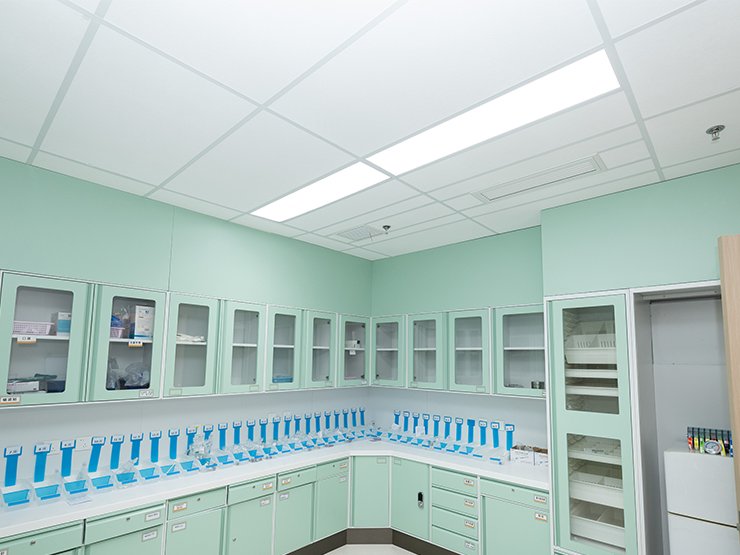
Seam Flat System Components
The seam flat arrangement should be specified as a coordinated build-up. Review the backing board, adhesive, fiberglass acoustic board, selected tile edge, substrate condition, joint appearance, and service openings together before finalizing the installation method.
| Component | System Role / Visible Detail | Coordination note |
| Backing Board | Base layer behind the acoustic board | Confirm the substrate type, flatness, strength, dimensions, and fixing conditions before installation. |
| Adhesive | Bonding layer between the backing and acoustic boards | Confirm the compatible adhesive, application method, curing conditions, and substrate preparation. |
| Fiberglass Acoustic Board | Visible acoustic panel layer | Confirm panel dimensions, thickness, weight, surface, edge detail, and installation sequence. |
| Square Edge Tile | Straight-edged panel with a visible joint line | Review joint lines, module, alignment, and the intended flat-ceiling appearance. |
| Beveled Edge Tile | Beveled edge creating a defined joint line | Review the reveal, joint treatment, module, and visible edge effect. |
| Tegular Edge Tile | Stepped panel-edge detail; final joint appearance depends on fixing | Confirm the edge detail, fixing arrangement, module, and compatibility with the selected build-up. |
How the Seam Flat System Works
A seam flat ceiling is built directly against a prepared substrate rather than suspended from a visible grid. The backing board provides the base, the adhesive supports the fixing arrangement, and the fiberglass acoustic board forms the visible ceiling layer. The final result depends on the substrate, panel edge, joint treatment, ceiling geometry, service openings, and installation conditions.
Substrate and Backing Board
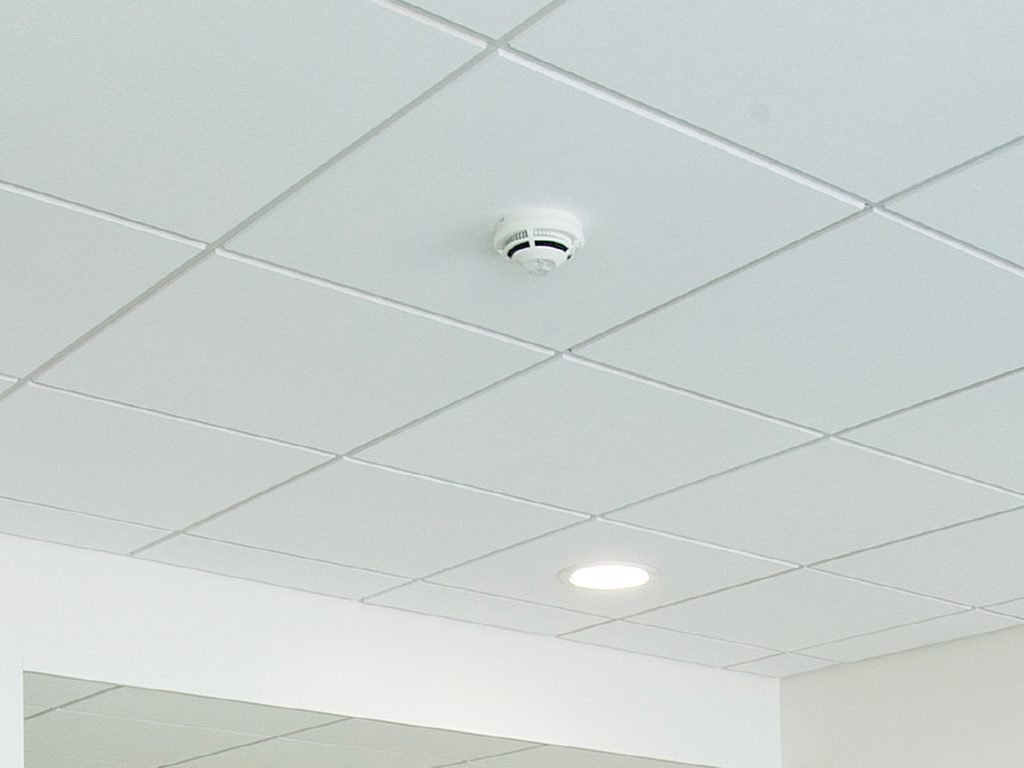
The visible main channels and cross tees define the ceiling grid and remain part of the finished appearance. Coordinate their direction, spacing, intersections, and panel module with the room layout, lighting, air-conditioning outlets, and other visible services.
Adhesive and Panel Fixing
Confirm the adhesive compatibility, application coverage, curing conditions, and installation sequence for the selected panel and backing board. Do not treat the adhesive as interchangeable with other products without checking the technical requirements.
Panel Edge and Joint Appearance
Square-edge, beveled-edge, and tegular-edge tiles create different joint and shadow-line effects. Select the edge according to the desired appearance, panel layout, joint treatment, and project drawings.
Project Applications
Seam flat systems can be considered for interiors that require a coordinated flat ceiling appearance and a direct-fix installation approach. The appropriate build-up depends on the substrate, panel edge, service layout, acoustic objectives, and project requirements.
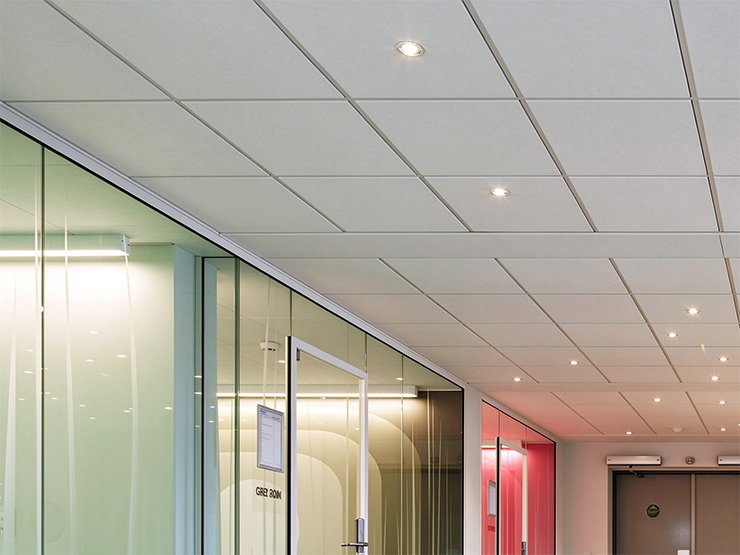
Office and Commercial Interiors
Coordinate the flat ceiling surface with lighting, air-conditioning outlets, access points, room layout, and the required joint appearance.
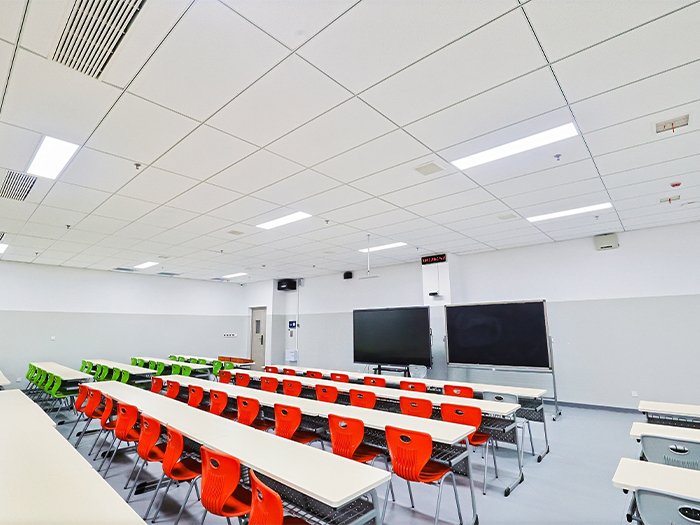
Education and Public Interiors
Review the substrate condition, maintenance requirements, panel layout, service openings, and installation sequence for classrooms, corridors, and shared public areas.
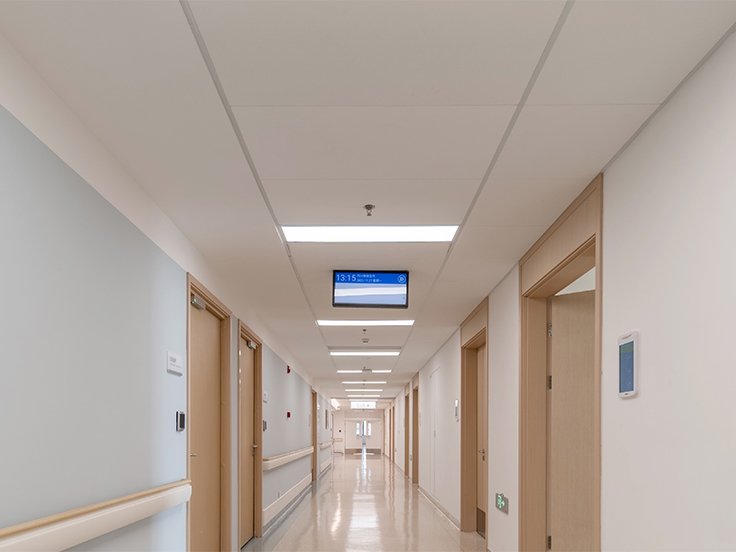
Hospitality and Retail Interiors
Coordinate the panel edge, joint treatment, lighting, ceiling geometry, and visible finish with the interior design and maintenance plan.
Renovation and Direct-Fix Projects
Confirm the existing ceiling or backing condition, available installation depth, service coordination, substrate preparation, and access requirements before selecting the direct-fix arrangement.
Installation & Compatibility
Before specifying the Seam Flat Ceiling System, confirm the following items against the project drawings and current technical documents:
- Substrate and backing-board type, flatness, strength, and condition
- Compatible adhesive and preparation requirements
- Fiberglass acoustic board dimensions, thickness, weight, and surface
- Selected square, beveled, or tegular edge
- Joint treatment, alignment tolerance, and visible seam requirements
- Ceiling geometry, perimeter conditions, and transition details
- Lighting, air-conditioning outlets, inspection panels, and service openings
- Moisture, curing, access, maintenance, and installation conditions
Request the current installation guidance and component information for the selected configuration before ordering.
Product Documents & Inquiry
For a Seam Flat Ceiling System inquiry, share the selected panel and edge detail, substrate or backing-board information, ceiling layout or drawings, required ceiling area, service-opening requirements, estimated quantity, project destination, and any specific joint or finish requirements. UET Ceilings can then review the suitable build-up, compatible components, current technical documents, and ordering details.
Exposed-Grid System FAQ
Need an Exposed-Grid Ceiling System for Your Project?
Share your ceiling layout, substrate information, panel edge preference, required area, service-opening details, estimated quantity, and project destination. We can help review the direct-fix build-up, compatible components, and technical information needed for your inquiry.